Showing posts with label technique. Show all posts

03 July 2013

If Writers are Liars, then Artists are Theives


"One good theif is worth 10 good scholars, and you can take the word 'scholar' and replace it with anything"

  I think now's a good time to retract my opinion about 'King Candy' from Wreck it Ralph. (blog post link). I didn't like the character because he's a rip-off of the Disney version of the Mad Hatter.
   But frankly, everything's a rip off.

One of the main points of Austin Kleon's book "steal like an artist", is that everybody mimics, "steals" and incorporates work into their own. As he reminds the reader, the Beatles stared as a cover band.
 
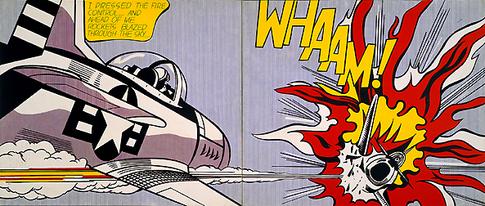
Gallery and 'fine' Artwork get a free pass for 'swiping'. And uses fancy terms like "reminiscent of", "homages" and "influences"
 

But what's the difference between "good stealing" and "bad stealing"?
 
Bad stealing is obvious. Taking credit for work that's not yours. In short: "stuff that will get you sued".

 So what is "Good Theft"?

Tweak it 
  Lets face it, superhero comics are incestuous as hell. This is why we have Deadpool.

DC had a masked mercenary character called Slade Wilson. Marvel comes out with a masked mercenary character called WADE Wilson.


BUT. There's some changes and tweaks beyond the cosmetic. While DC's "Deathstroke" remains serious and threatening as an adversary...

Deadpool, well... 


Enough changes have been made to the concept that now what started as a ripoff, turned into a...unique character in it's own right.

                             
  Remix it
  Let's say I want to make a TV show about Han Solo.

 Lucasfilm might have other ideas. But let's say you mix that up with post-Civil War America(and Let's say that your name is "Joss Wheadon" since this is obviously completely hypothetical) and you have Firefly. By bringing different sources to the mix, the concept is changed enough to avoid lawsuit and the new product is better as a result. Like a DJ, bits you want to use or admire need to be "remixed" .

The biggest pointer when ripping off shit is ADMIT YOU ARE STEALING (or "homaging" if you will) . Because
  a.) it makes you seem smart and shit when you can talk about "influences" and "homages".
   b.) it makes you seem academic and shit when you can "site your sources" in a weird fashion and
  c.) you are less likely to piss off whomever you ripped off when you give some due (or at least a tip of the hat)

Remix it with other stuff, tweak it enough to avoid legal issues, and FESS UP.

24 March 2013

Academic Discourse

So here's a thing I learned in early 2009 from the late Professor Jeremy "Sweetwater" Mullins, the "Sweetwater System for Academic Discourse".

In what terms do we talk about art? That's like listening to two fanboys (and for sake of argument, let's call them Joe  and Paul ) argue about which movie was better: Dark Knight Rises or the Avengers.

Joe : The Avengers is the best movie of all time
Paul:  Nuh-Uhh, the Dark Knight Rises is
Joe: The Dark Knight Rises is filled with poo and so's your mom!
Paul: Well, the Avengers is Lame, because people who like Firefly are Lame
Joe: Nuh Uh
Paul: Uh huh
 etc. This conversation isn't going anywhere. on what grounds do we base this?

Isn't art just subjective anyway? 

"I don't know much about Art, but I know what I like."

Oh yeah, well There's no accounting for taste. My favorite movie is "Kung Pow: Enter the Fist".

When critics and scholars speak of comedies, either if it's Shakespeare or the Simpsons: they aren't talking about how funny they are(i.e.: how much they like it personally), but about three different (and variable) factors like:

Profficientcy of Craft
  This is the simpliest measuring stick. Every craft, profession (and sub styles and movements) have their own rules and standards.
  For instance, in Architecture, one of the requirements of a structure is that it's stable, and not liable to fall down in the environment in which it's built, or in auto design, that the car run, and not explode.
.


There is a little homework involved with applying the rules of the correct school of design.

 "How to Draw Comic Books the Marvel Way" by John Buscema with Stan Lee's name slapped on the cover to sell copies, has a chapter on 'Storytelling'. Which maintains the BEST way to draw comic books is with exaggerated, heroic poses, exciting compositions with large depth of field and plenty of dutch angles !!

 A comic book page that uses dynamic, changing camera angles and compositions doesn't have to be a fight scene, either. Like this David Mazzucchelli page from Daredevil.

  It's a good sample from a great comic book, and if you read through "Daredevil: Born Again" you'll find that it is indeed drawn "the Marvel Way'.

 But that's no the only way to make a comic.Would this Calvin and Hobbes strip really be improved by "the Marvel Way"? No, because Calvin and Hobbes is crafted due to a different set of rules, a different school if you will.


Profundity of Meaning in (and out) of  Context
  In an earlier post, I ranted about the insistence of meaning and depth for 'legitimate' works of art verses sequences designed just for "pure entertainment". 

   Generally artwork has meaning, sometimes this is very literal
  Such as the clear labels on the objects and elements in this March 2013 Stuart Carlson Political Cartoon.

 and often, that meaning is something different, and more universal than the subject matter. Say you're watching "Finding Nemo". And you see a bunch of full grown adults crying.
Here, adults crying.

  "Gosh" thinks you "All these folks are way into Fish".
Here, not so much crying.

Were that the case, all of these viewers would get misty eyed every time they saw an aquarium: "Fiding Nemo" may feature fish: but it's not about fish...more like parent/child relationships and stuff.

 Let's go back to that Political Cartoon...

 ...pretty easy to understand, huh? I mean, the events are common knowledge, I know what the Boy Scouts are, and I'm familiar with the BSA's reputed and disputed tolerance policies. I even know that the Boy Scouts' motto is "Be Prepared", so I get a bit of the wordplay. I can evaluate not only where this cartoon is coming from,  but also if the viewpoint is better expressed than others: a unique observation, rather than a common slogan.

Let's look at a different political illustration, this one from 1909...

 What the hell is exactly going on? Who are these people? It looks like a midget bellhop with a giant dildo is escorting a forest ranger out of a nondescript building while they leave behind a small clone with a cross-dressing fat maid-man. 

  It helps to know that these are specific likenesses to William Loeb, Jr. Theodore Roosevelt and  William Taft.  It also helps to know that in 1909, that Taft succeeded Roosevelt as President of the United States. Knowing about Roosevelts' public image as an outdoorsman helps explain the forest-ranger type outfit, and  his famous "big stick" policies explains why William Loeb is literally carrying a big stick.
  Like Carlson's 'Boy Scouts' gag, the Roosevelt cartoon personifies an event, and through metaphor, gives an opinion on what transacts. For instance, it seems that the editors of Puck think that Roosevelt's relationship with Taft is agreeable, but moreso on Roosevelt's terms, imagine an alternative magazine cover where william Taft is kicking Roosevelt out of the doorway...it changes the meaning.
It helps to do some homework, because simple context of "Who was President of the United States in 1909 and what did he look like", changes the image from  some kind of 'WTF' meme, to an understandable period opinion piece.


Pure Emotional Reaction on the part of the viewer

This isn't about whether the viewer particularly likes the piece, but if it elicits a reaction.
 Along with awe, arousal, laughter, warm fuzzies and excitement, there's also horror, revulsion, sadness, and disgust.

So it's a safe bet that a picture of a bunch of puppies will evoke a reaction.


d'awwwwww

And a picture of dead babies will definitely evoke an  emotional reaction.


picture not available


Neither Puppies or dead babies alone will make Art with a capital A... but taken alone, neither will well-crafted, but meaningless technical excersise, or a meaningfully clear, but perhaps sterile political observation.

 For Art to take hold, enlighten minds and do all that cool stuff that Art needs to do, stuff's gotta have a combination of all three.


So back to the earlier argument.


   Now, Paul and Joe may still argue about their favorite movies,  but it will be about terms like whether "The Avengers" is a well-crafted action movie according to screen tradition, or if "the Dark Knight Rises" has relevance to the Occupy generation. Is Robert Downey Jr. sillier than Tom Hardy? Does Tom Hardy's silliness run contrary to "Dark Knight Rises"  otherwise serious presentation? Does Chris Evans' seriousness run contrary to "the Avengers" otherwise silly presentation? 

 I doubt this would actually change anybody's mind about their favorite movie,  but Paul may find out stuff about "The Avengers" he hasn't thought about before,  and Joe might agree that although he doesn't like "Dark Knight Rises" personally, that the film does have merit.

 Which is the difference between a whining competition and Academic Discourse.

07 November 2012

Kick'n November with some sketchbook exerpts

  Not much to say with this sketch dump, really.

This is  a variation on Niccolaides' "Daily composition" exercise from "The Natural Way to Draw" (kickass book, by the way), albeit in comic strip form. 
  The Daily composition is a 15 minute sketch from memory of any scene seen during the past 24 hours. Nothing fancy, nothing precious, nothing to be shared: just do it and move on to the next.
  So Why not a daily 3 panel strip, and train that old brain to think visually and sequentially? Unlike autobiographic strips like James Kochalka's American Elf, the daily strip is not really for sharing (not yet, anyway), more of a variation on a theme. *


I can't say I'm really happy with what I'm turning out right now, BUT
 to paraphrase Fredrick Nietzsche: "Art is something to be surpassed".


*For those of you curious as to what the strip is portraying, a co-worker had come in that day in a dirty T-shirt, claiming somebody stole his laundry. Since the Michaels' hit squad comes out of the walls if you aren't to dress code, I hiked over to Macy's and got him an $8 work shirt from the clearance rack. 
   If I ever get hired at Dreamworks I hope I don't have to buy people clothes.

18 September 2012

Recursive suspension of disbelief: also, robots

Okay, so let's say it's approximately between the years of 1987 and 2010 and you're going to Disney World,  and you're gonna ride "Star Tours".

 Anyway, you, wait through the line get in the impressive but fake spaceship thing and you sit down staring at a large garage door with a TV screen to the right.


Somebody turns a switch, walks out of the vehicle, and this shows up on the tv.

 "Hello, I'm a cute robot who shouts a lot, since you're waiting for this ride to start, I'll go ahead and raise this garage door".


 WHOA, look at that, the robot's not in the TV, he's REAL, and ohmygodwe'reflyingthroughspacewheeeee!!!

Anyway, this ties into something I ran across in Rowland Wilson's Trade Secrets:
...the use of the system within a System.


 Let's say your weird drama friends drag you to watch a High School production of Hamlet, and like most High School productions, it sucks, but your weird drama friends won't stop talking about the significance of the play within the play  and how Shakespeare used similar device in a Midsummer Night's Dream and stuff.


You get bored with them talking about all that and would rather read an article about Batman at overthinkingit.com

 Putting a tiny story that the characters view within the context of a big story is more than a gimmick, it's a useful device, that can help acheive such effects as ...

PLOT EXPOSITION
  Here is a man being chased by a Dinosaur.

   His innner monolog, shortly after "Shit, I'm being chased by a Dinosaur" is most likely "Where did this Dinosaur come from?"
The audience wonders this too. But if the characters just opened their mouths and explained all the sciencey stuff in glorious detail...
 
    that would be boring.

  So, Jurrasic Park:the movie features Mr DNA:The movie inside the movie,  an educational-style cartoon starring a strand of DNA talking about science-wizards and other hurbelby burbeldies.
  And the audience is sufficiently informed on why there are dinosaurs to chase around Jeff Goldblum, but without being as bored as they'd be by reading Jurassic Park: the book.


  THEMATIC DEVICE.
   The Powell and Pressburger's  "The Red Shoes" (1948) is a talking, non-musical drama about a ballerina choosing between love and work.

 It features an elaborate ballet sequence presented as a story-within-a-story retelling the titular Hans Christian Anderson story. The sequence featured wild set dressing and crazy colors, stylasitcally different from the rest of the movie.


The movie has a downer ending, and seems to comment on obsession, and tragic side of art, which has several parallels with the Fairy Tale about the little girl who dies because she can't stop dancing. 


WORLD BUILDING


 Both Lewis Carrol's "Wonderland"  and J.R.R. Tolkein's "Middle Earth" have proven to be some of the most engrossing worlds in fiction.  Yet the authors seem to be completely different, except both of them love poetry.

Random.

Pointless.

Poetry.


  Whether it be the giant Caterpillar or Aragorn son of Arathorn, it seems like almost everybody has a ballad to sing, or a few verses to recite. These poems are complete works unto themselves, and plopped into the story proper, one suspects, because the author bloody well felt like it.
  Little to none of it has anything to do with the plot.

But  the ancient ballads of Gondor and  exploits of Father William enrich the worlds they exist within, through layers of artifice, much like loud robots.

See what I did there?


  Even though motion simulators were a novel idea in 1987, the concept was easy enough to grasp: the images for the ride were a point-of-view film while the small theater was bounced around on hydraulics in synch with the "ride". Even the Scooby Doo  Gang could figure that out.... But there's that damn TV screen on the righthand side of the ride display: the one that first shows off the robot.

The foolish human brain looks at the TV tube and says "that is FAKE", by comparison, everything else, the larger, more sophisticated movie screen and the onboard shouting robot, seem real, which  encourages the suspension of disbelief through showing depth, rather than breadth.


 So to nest stories within stories is more than a gimmick, it's a tool for engrossing the viewer in plot, character, and making them believe, even for a moment, that what they just witnessed is real.


27 August 2012

Sketchi Do Daa

So more sketch highlights, here. These come from a 6X9 Moleskine I received as a gift.  (The above image comes from watching TV).

  I've started putting page quotas in my daily calendar again: It's pretty good if you get self conscious about drawing(sometimes I refer to it as "Page Fright". 'Course, it's a SKETCHbook, so if every page looks perfect, you're probably doing something wrong.

A variant on the quota. The Daily Composition: The only chapter of "The Natural Way to Draw" that I re-read obsessively. (And also place on my daily calendar).

 Manifest boredom combined with a "Territory Ahead" Clothing Catalog. If you find one of these strange documents, note that the Women's clothing are all modeled, and the men's clothing is all folded and laid out on tables. Why are there no men wearing Clothing? Does Territory Ahead have a huge closet of Naked Men somewhere? (On the psychological level, don't we all?)


  Like my previous "Totoro" post, I figured I'd show my WORST sketchbook sketch, either for fun or just to make the better ones worth looking at.  Anyway, I found that I'd skipped a couple of pages, which I think counts...
 ... Because even the worst artists get better, but only if they continue. 

25 April 2012

3-points to happier drawing

 (Insert standard apologetic text about lack in updating Blog, here. Is everybody done with that? Okay, so then we can move on). 

  These are from a 4"x6" Sketchbook I kept jammed in my back pocket for two months. And I've rediscovered a useful habit for sketching; self-critique. 

Actually it's the "nice sandwich" mode of critique I found detailed in a book about sports coaching, where the evaluation is restrained to one statement about what went well, what can be improved next time, and how you've improved since last time. Then, apply what you've written into the next drawing. 

   Take for instance the below two sketches done the same afternoon.

 "I - E = D (Inspiration minus Expression equals Depression, a favorite catchphrase of Walt Stanchfield) 

-Appealing Subject (something good, drawing a cute kid in a bike seat instead of the one-millionth slouching commuter walking by)

- Draw Clearly Otherwise it's a mess of scribbles (what can be improved upon in the next sketch, surely, there are several other points in this study that can be attended too, but since I am an artist of very little brain and critical fortitude, the helpful pointer is just about clarity) 

-Good attention to proportions (the bodily proportions in the preceding sketch were embarrassingly wrong.) "


 "Good Foot plant (ground plane issues seem to keep cropping up in my sketches recently, so it's nice to highlight when I get it right)

 - Far too rigid . There are no straight bones in the body.

-Clear, though! (Which is why this study was executed in silhouette: the acid test of clarity) "


I find verbalising directions for improvement keeps me more engaged with on-site reportage, and that keeping critiques restricted to one point of improvement keeps the process fun.

Just a thought, anyway.


26 January 2012

Inspiration and stuff.


So how does one "stay inspired"?

Recently, super awesome character animator Andreas Deja posted some of his "embarrasing early work" on his blog.


This is his early portfolio work from the seventies, and is a joy to look at, certainly, beyond what I'm putting out right now.

Sure, the nobler side of me would be "WHAT INSPIRATION! I MUST NOW WORK HARDER TO REACH SUCH HEIGHTS AS HAVE BEEN DEMONSTRATED BY THIS LEADER IN THE ART FORM". But mostly, the me-who-wants-to-get-a-job-in-animation-right-now says "aww shoot, wutza use?"

Conventional art-wisdom tells us to quit comparing ourselves against other artists, just our own performance because

a.) You'l never draw 'just like Michelangelo' and
b.) Even the great artists are highly critical of their work, it's how they get to be better and how they get to be "great" artists, by never being satisfied.

So let's say the conventional wisdom doesn't work and one still moans "I'll never draw that good!" And you still need encouragement, inspiration and something to motivate you right now!

Well...

"Annoying Orange" just got a TV deal with Cartoon Network. As far as technique goes, everyone remotely familiar with after effects has thought the same thing.


"Shoot, I could do that."