22 October 2013

Some Bill Mauldin finds.

Bill Mauldin(1921-2003) was a cartoonist during and after World War II, most famous for his creations "Willie and Joe", which first appeared in the 45th
I'm not qualified to speak of Mauldin's life history as others have done , but I have found a vintage magazine, showcasing his work.

Mauldin insisted on drawing his wartime cartoons in the field.  Unlike many domestically produced cartoons or propaganda pieces, there is very little depiction of the enemy, silly, threatening or otherwise such as in the Disney film "Education for Death".  Nor is there a lot of "wacky" humor, a-la the "Private Snafu" shorts, or "New Yorker" style drollery.

     In fact, the life of a soldier comes off as depressing and mundane.


 Rumor has it that Mauldin's gags ticked off more than a few officers, but the army saw fit to publish them, anyway.

   War, the soldier's plight and lifestyle have been examined and depicted for as long as human history, but more often than not, from the outside, with an editorial perspective. 
  Perhaps the reason that Mauldin's wartime work has endured is the simple honesty. 
  In the afterward to the magazine, Mauldin wrote of his fellow soldiers:
     "They've aged 15 to 20 years, have beards, their eyes have bags underneath, and they wear a dopey expression because they need a lot of sleep . Some of them are getting bowlegged and flatfooted from hiking too much. The poor guys have changed so much that I hardly recognize them". 

  I guess that's why he drew the pictures, because sometimes, there are no words.

03 July 2013

If Writers are Liars, then Artists are Theives


"One good theif is worth 10 good scholars, and you can take the word 'scholar' and replace it with anything"

  I think now's a good time to retract my opinion about 'King Candy' from Wreck it Ralph. (blog post link). I didn't like the character because he's a rip-off of the Disney version of the Mad Hatter.
   But frankly, everything's a rip off.

One of the main points of Austin Kleon's book "steal like an artist", is that everybody mimics, "steals" and incorporates work into their own. As he reminds the reader, the Beatles stared as a cover band.
 
Gallery and 'fine' Artwork get a free pass for 'swiping'. And uses fancy terms like "reminiscent of", "homages" and "influences"
 

But what's the difference between "good stealing" and "bad stealing"?
 
Bad stealing is obvious. Taking credit for work that's not yours. In short: "stuff that will get you sued".

 So what is "Good Theft"?

Tweak it 
  Lets face it, superhero comics are incestuous as hell. This is why we have Deadpool.

DC had a masked mercenary character called Slade Wilson. Marvel comes out with a masked mercenary character called WADE Wilson.


BUT. There's some changes and tweaks beyond the cosmetic. While DC's "Deathstroke" remains serious and threatening as an adversary...

Deadpool, well... 


Enough changes have been made to the concept that now what started as a ripoff, turned into a...unique character in it's own right.

                             
  Remix it
  Let's say I want to make a TV show about Han Solo.

 Lucasfilm might have other ideas. But let's say you mix that up with post-Civil War America(and Let's say that your name is "Joss Wheadon" since this is obviously completely hypothetical) and you have Firefly. By bringing different sources to the mix, the concept is changed enough to avoid lawsuit and the new product is better as a result. Like a DJ, bits you want to use or admire need to be "remixed" .

The biggest pointer when ripping off shit is ADMIT YOU ARE STEALING (or "homaging" if you will) . Because
  a.) it makes you seem smart and shit when you can talk about "influences" and "homages".
   b.) it makes you seem academic and shit when you can "site your sources" in a weird fashion and
  c.) you are less likely to piss off whomever you ripped off when you give some due (or at least a tip of the hat)

Remix it with other stuff, tweak it enough to avoid legal issues, and FESS UP.

24 March 2013

Academic Discourse

So here's a thing I learned in early 2009 from the late Professor Jeremy "Sweetwater" Mullins, the "Sweetwater System for Academic Discourse".

In what terms do we talk about art? That's like listening to two fanboys (and for sake of argument, let's call them Joe  and Paul ) argue about which movie was better: Dark Knight Rises or the Avengers.

Joe : The Avengers is the best movie of all time
Paul:  Nuh-Uhh, the Dark Knight Rises is
Joe: The Dark Knight Rises is filled with poo and so's your mom!
Paul: Well, the Avengers is Lame, because people who like Firefly are Lame
Joe: Nuh Uh
Paul: Uh huh
 etc. This conversation isn't going anywhere. on what grounds do we base this?

Isn't art just subjective anyway? 

"I don't know much about Art, but I know what I like."

Oh yeah, well There's no accounting for taste. My favorite movie is "Kung Pow: Enter the Fist".

When critics and scholars speak of comedies, either if it's Shakespeare or the Simpsons: they aren't talking about how funny they are(i.e.: how much they like it personally), but about three different (and variable) factors like:

Profficientcy of Craft
  This is the simpliest measuring stick. Every craft, profession (and sub styles and movements) have their own rules and standards.
  For instance, in Architecture, one of the requirements of a structure is that it's stable, and not liable to fall down in the environment in which it's built, or in auto design, that the car run, and not explode.
.


There is a little homework involved with applying the rules of the correct school of design.

 "How to Draw Comic Books the Marvel Way" by John Buscema with Stan Lee's name slapped on the cover to sell copies, has a chapter on 'Storytelling'. Which maintains the BEST way to draw comic books is with exaggerated, heroic poses, exciting compositions with large depth of field and plenty of dutch angles !!

 A comic book page that uses dynamic, changing camera angles and compositions doesn't have to be a fight scene, either. Like this David Mazzucchelli page from Daredevil.

  It's a good sample from a great comic book, and if you read through "Daredevil: Born Again" you'll find that it is indeed drawn "the Marvel Way'.

 But that's no the only way to make a comic.Would this Calvin and Hobbes strip really be improved by "the Marvel Way"? No, because Calvin and Hobbes is crafted due to a different set of rules, a different school if you will.


Profundity of Meaning in (and out) of  Context
  In an earlier post, I ranted about the insistence of meaning and depth for 'legitimate' works of art verses sequences designed just for "pure entertainment". 

   Generally artwork has meaning, sometimes this is very literal
  Such as the clear labels on the objects and elements in this March 2013 Stuart Carlson Political Cartoon.

 and often, that meaning is something different, and more universal than the subject matter. Say you're watching "Finding Nemo". And you see a bunch of full grown adults crying.
Here, adults crying.

  "Gosh" thinks you "All these folks are way into Fish".
Here, not so much crying.

Were that the case, all of these viewers would get misty eyed every time they saw an aquarium: "Fiding Nemo" may feature fish: but it's not about fish...more like parent/child relationships and stuff.

 Let's go back to that Political Cartoon...

 ...pretty easy to understand, huh? I mean, the events are common knowledge, I know what the Boy Scouts are, and I'm familiar with the BSA's reputed and disputed tolerance policies. I even know that the Boy Scouts' motto is "Be Prepared", so I get a bit of the wordplay. I can evaluate not only where this cartoon is coming from,  but also if the viewpoint is better expressed than others: a unique observation, rather than a common slogan.

Let's look at a different political illustration, this one from 1909...

 What the hell is exactly going on? Who are these people? It looks like a midget bellhop with a giant dildo is escorting a forest ranger out of a nondescript building while they leave behind a small clone with a cross-dressing fat maid-man. 

  It helps to know that these are specific likenesses to William Loeb, Jr. Theodore Roosevelt and  William Taft.  It also helps to know that in 1909, that Taft succeeded Roosevelt as President of the United States. Knowing about Roosevelts' public image as an outdoorsman helps explain the forest-ranger type outfit, and  his famous "big stick" policies explains why William Loeb is literally carrying a big stick.
  Like Carlson's 'Boy Scouts' gag, the Roosevelt cartoon personifies an event, and through metaphor, gives an opinion on what transacts. For instance, it seems that the editors of Puck think that Roosevelt's relationship with Taft is agreeable, but moreso on Roosevelt's terms, imagine an alternative magazine cover where william Taft is kicking Roosevelt out of the doorway...it changes the meaning.
It helps to do some homework, because simple context of "Who was President of the United States in 1909 and what did he look like", changes the image from  some kind of 'WTF' meme, to an understandable period opinion piece.


Pure Emotional Reaction on the part of the viewer

This isn't about whether the viewer particularly likes the piece, but if it elicits a reaction.
 Along with awe, arousal, laughter, warm fuzzies and excitement, there's also horror, revulsion, sadness, and disgust.

So it's a safe bet that a picture of a bunch of puppies will evoke a reaction.


d'awwwwww

And a picture of dead babies will definitely evoke an  emotional reaction.


picture not available


Neither Puppies or dead babies alone will make Art with a capital A... but taken alone, neither will well-crafted, but meaningless technical excersise, or a meaningfully clear, but perhaps sterile political observation.

 For Art to take hold, enlighten minds and do all that cool stuff that Art needs to do, stuff's gotta have a combination of all three.


So back to the earlier argument.


   Now, Paul and Joe may still argue about their favorite movies,  but it will be about terms like whether "The Avengers" is a well-crafted action movie according to screen tradition, or if "the Dark Knight Rises" has relevance to the Occupy generation. Is Robert Downey Jr. sillier than Tom Hardy? Does Tom Hardy's silliness run contrary to "Dark Knight Rises"  otherwise serious presentation? Does Chris Evans' seriousness run contrary to "the Avengers" otherwise silly presentation? 

 I doubt this would actually change anybody's mind about their favorite movie,  but Paul may find out stuff about "The Avengers" he hasn't thought about before,  and Joe might agree that although he doesn't like "Dark Knight Rises" personally, that the film does have merit.

 Which is the difference between a whining competition and Academic Discourse.

06 December 2012

The Angry Birds Teach you French

What is the Secret to Success?

Excellence? Okay, then what is the path to excellence? Most might answer Hard Work. And many stop there.

What's the fuel for hard work? Motivation! Okay, so where can I get some?

How about a mentor? Or a rival? Or even divine conviction?

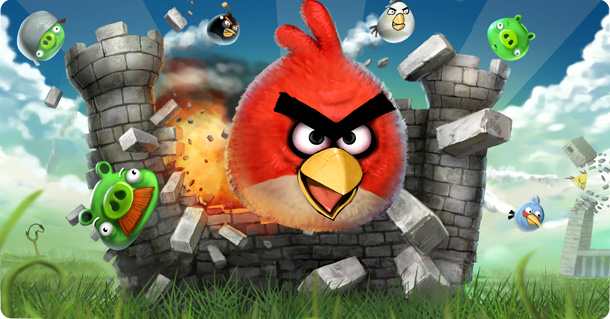
Actually, I think a readily available source of inspiration, can be found in "Angry Birds".
 Or more precisely, a focus on increasing intrinsic motivation for a task, rather than the task itself or the goal to be achieved.

In his book (and thinly veiled tract for self-determination theory)"Drive", Daniel Pink postulates that the keys to increasing motivation in self and employees is to set up environmental factors that encourage Autonomy, Mastery and Purpose, like some kind of triforce of business-self-help book formulae.


What intrigues me here is "Mastery".

How much money do people get paid for playing "Angry Birds"?  Does your iPhone just spit out redeemable prize tickets once the last big green piggiy is blown up? 
 One of life's lessons learned from "The Mighty Ducks", Is that peak performance comes from enjoying the game instead of  not pursuit of the prize, and some economic theories put forth a big paycheck or trophy doesn't vitiate subjects, and can in fact, discourage.

The raising level of difficulty is such an essential part of gamer culture, it's part of what defines the difference between a lowercase "game" like MS solitaire, and waiting in line for "blown weekend: the expansion pack".Games like these are a mess of increasing speeds, "leveling up", and  increasingly tough "Boss Battles". In short, Angry Birds, like many popular video games, get harder the longer you play it.

By comparison, what's the first level of your favorite video game like?


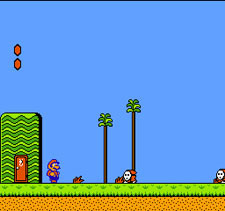
example only, Super Mario Bros 2 is NOBODY'S favorite video game

Damned Easy!

 As the maxim goes, "The Journey of 10,000 miles begins with the first step", so goes the crack dealer's corollary "The first one's free."


So here's the example. Let's say you're going to Quebec and  want to learn to speak French, but you don't like learning languages. You figure you could do it, if you had the Rocky Balboa-esque drive to get up at 5am, eat raw eggs and train hard at work memorizing grammar, syntax and vocabulary, but you just don't. Not to worry, the principles of Angry Birds can help you out!

1. Get rid of the prizes.

and ignore the external factors that might act as prizes. Remember, nobody gives you prizes for playing Angry birds. So fight the urge to give yourself congratulatory Oreos every half hour of study.

Besides, if you eat that many Oreos, you'll turn into Jabba the Hut and the Quebecois will just laugh at you.

2. Plot your plans on a curve. AND  Make the first one easy.

This is the source of positive addiction to  task mastery (and Angry Birds). For instance, in your quest to learn french, you might have a weekly quota of 42 vocabulary words per week to memorize. Which is six per day. Sure, that's not hard (or maybe it is to retain that information). But that will get boring.

 I know it sounds contrary to the ways of Hard Work, but why not just start with one vocabulary word on the first day, then two on the next, and so forth. There is an endorphin buzz that comes with meeting goals, and the more hits you have early will drive you for the bigger targets that you set for yourself later.

3. The little question.

"Did I do it better than yesterday? Did I do this better than last time? "

 Because, failures along the road are inevitable. It's possible that you might not master speaking French by the time you go to Canada. Sooner or later your own goals from tip #2 will escalate too high to meet when you're attempting to memorize 56 irregular verbs in one day.

So yeah, shit gets tough, and every so often you've gotta step back and remind yourself that the name of the game is to always be  improving at what you do, and to make that your target, is what it means to work hard.


22 November 2012

Some complaing and SPOILERS

 This'll have like spoilers and stuff, so consider ye warned.


So I saw Wreck It Ralph recently, and admired the film very much. Except I felt it lacked a distinct.


King Candy bears a striking aural resemblance to old time Film and Radio Comedian Ed Wynn, and more specifically to another cartoon that Wynn voiced, the Mad Hatter from Alice in Wonderland.


Big deal, you might say. Feature animation characters often rip off other film roles. Either directly, or through homage.  

  For Example,  both 'Tangled' and the Original Broadway production Of "Into the Woods" feature very similar interpretations of Rapunzel's witch-mother, right down to magic age-changing and a love of capes.

And voice actor is a celebrity in their own right, the character often winds up looking like 'em, so Why doesn't King Candy look more like Alan Tudyk?  


Of course, swiping cartoon character designs is a venerated tradition, as many an internet meme will point out. 


But if the Ed Wynn Mad Hatter  was the perfect choice for a character in a movie that takes place in a video game universe, I'd like to know why


 This is subjective, but I feel villains need to be interesting, even entertaining in their own right.

Alfred Hitchcock directed tons of thrillers throughout his lifetime, but honestly, which is the most well remembered? 

After two and a half decades of boilerplate spies and saboteurs, the most well-remembered character in the Hitchcock canon is the villain of Psycho "Mother Bates".

A distinct, entertaining, even  colorful villain can mean the difference between a ponderous, talky, boring movie and an intriguing adventure.

Even in low-key "family fare", the bad guys have to at least be memorable,


But who was the bad guy in Wreck It Ralph? 

The guy from the board game? 
The Mad Hatter? Wait, which one?


 It's a shame, because on the whole, Wreck-It-Ralph is a fantastic movie, crafted with wit and sensitivity, but I find it's dragged down by an antagonist who appears little more than a thin celebrity impersonation.