Showing posts with label character. Show all posts

22 November 2012

Some complaing and SPOILERS

 This'll have like spoilers and stuff, so consider ye warned.


So I saw Wreck It Ralph recently, and admired the film very much. Except I felt it lacked a distinct.


King Candy bears a striking aural resemblance to old time Film and Radio Comedian Ed Wynn, and more specifically to another cartoon that Wynn voiced, the Mad Hatter from Alice in Wonderland.


Big deal, you might say. Feature animation characters often rip off other film roles. Either directly, or through homage.  

  For Example,  both 'Tangled' and the Original Broadway production Of "Into the Woods" feature very similar interpretations of Rapunzel's witch-mother, right down to magic age-changing and a love of capes.

And voice actor is a celebrity in their own right, the character often winds up looking like 'em, so Why doesn't King Candy look more like Alan Tudyk?  


Of course, swiping cartoon character designs is a venerated tradition, as many an internet meme will point out. 


But if the Ed Wynn Mad Hatter  was the perfect choice for a character in a movie that takes place in a video game universe, I'd like to know why


 This is subjective, but I feel villains need to be interesting, even entertaining in their own right.

Alfred Hitchcock directed tons of thrillers throughout his lifetime, but honestly, which is the most well remembered? 

After two and a half decades of boilerplate spies and saboteurs, the most well-remembered character in the Hitchcock canon is the villain of Psycho "Mother Bates".

A distinct, entertaining, even  colorful villain can mean the difference between a ponderous, talky, boring movie and an intriguing adventure.

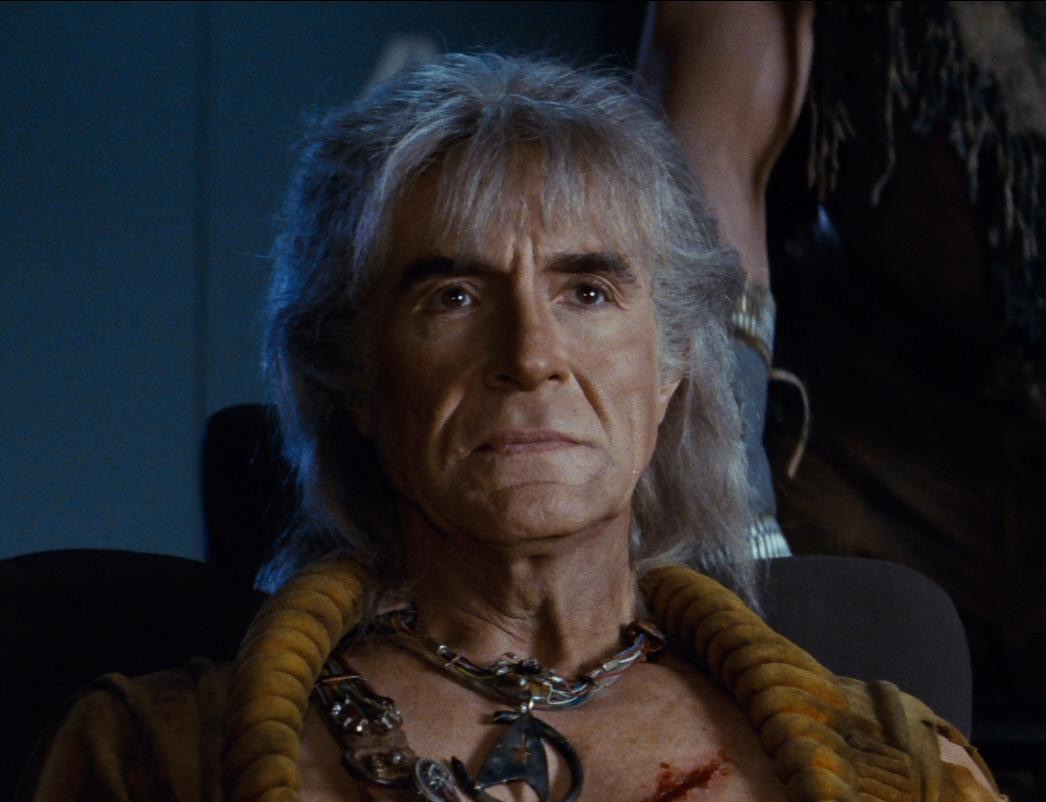
Even in low-key "family fare", the bad guys have to at least be memorable,


But who was the bad guy in Wreck It Ralph? 

The guy from the board game? 
The Mad Hatter? Wait, which one?


 It's a shame, because on the whole, Wreck-It-Ralph is a fantastic movie, crafted with wit and sensitivity, but I find it's dragged down by an antagonist who appears little more than a thin celebrity impersonation.


13 November 2011

The Films of Jonathan Lynn: The Whole Nine Yards


The Whole Nine Yards
Released in 2000 by Warner Bros.
Written by Michael Kapner

A Dentist named Oz(Matthew Perry), gets a new neighbor who he instantly recognizes as “Jimmy the Tulip” (Bruce Willis) an infamous mob hitman. Oz gets caught up in a vendetta between Jimmy and his former boss, and a scenario where everybody wants to kill everybody else.

“Yards” is an off-target movie, it’s about Oz when it should be about Jimmy, who is an amazing character, seeded by some great cast design.

In “Story” Robert McKee argues that the dimensionality of a character is expressed in the surrounding cast. With Sophie, Jimmy is a cold killer, but with Jill, the hopeful hitperson in-training, he’s a supportive lover. When Jimmy is alone with Oz, he’s at ease, and a friendly guy. In the presence of fellow hitman Frankie, he’s always holding a weapon. Though a simple dichotomy of “hitman with a heart” may feel a little stale, it’s more compelling than “Dentist with no-particularly-contradictory-characteristics-at-all”.

I’m not so sure Jimmy isn’t the main character, as the climax of the film revolves around Jimmy’s decision: whether or not to kill Oz. (SPOLIER: he doesn’t). There’s no real tension. Who’d believe that Bruce Willis would whack Matthew Perry? If the audience is going buy the final dilemma, need to see the situation’s alternative beforehand. If we don’t see Jimmy kill a guy like Oz, we don’t know the consequences of his final decision. There’s a lot of exposition about Jimmy, but little action. Would the climax of “Star Wars” be so tense if we didn’t SEE what happened to planet Aldreaan first?

That said, Michael Kapner’s screenplay is a joy. Most comedy endings are predictable: the guy gets the girl, the innocent kids on death row are acquitted, the objective is obtained and they live happily ever after. But “Yards” employs a clever series of Hitchcockian plot twists and revelations, keeping the audience guessing at the final resolution, and interested in the story (even if the lead characters aren’t interesting) .

“The Whole Nine Yards” is about an everyman thrown in with some deeply weird people. And as such, a successful connection with the audience depends on how they relate to the everyman in question. With Oz, I just… don’t. Maybe it’s because the character is written with the same depth as the wacky hitmen he’s surrounded by , or maybe I just don’t find Matthew Perry all that appealing, lacking in that Cary Grant “It” factor. Perhaps if it was Jeff Daniels taking pratfalls and proving his virtue under fire, I’d have a different reaction. But I’m just not invested in Oz’s progress in all of this mess.

To date, “The Whole Nine Yards” is arguably Jonathan Lynn’s most successful directorial effort, with the highest opening weekend gross of any other of his films. (and this is the guy who still managed to get work after ‘Greedy’). And although I don’t particularly care for it, I certainly appreciate it more than “The Fighting Temptations”.

24 September 2011

The Films of Jonathan Lynn: Trial and Error


Released in 1997 by New Line Cinema, Screenplay by Sara and Gregory Bernstein, directed, of course, by Jonathan Lynn.

"Trial and Error" follows best friends Charles Tuttle (Jeff Daniels), a high-powered lawyer and Richard Reietti (Michael Richards), a struggling actor, and their high-jinks in a small town in Nevada . When Charles is too hung over from his bachelor party (thrown by Richard, of course) to appear in court for a routine continuation, Richard takes his place, but the matter goes to trial. While Richard has to defend a shameless defrauder (Rip Torn), Charles has to cope with his fall from grace, merely being ordinary.

Visually, the exteriors look great. In my post about "Wild Target", I've slammed Gabriel Beristain for setting up bland "sitcom style" look to these movies, but with the stunning snowcapped mountains in the background and exposures such that you can almost feel the desert heat, "Trial and Error" so far has set up the best cinematography in a Jonathan Lynn movie since Beristain's work on "My Cousin Vinny".


"Trial" is a well crafted movie with some very funny scenes , but compared with the other movies in Lynn's catalog, it doesn't really offer anything new. Every funny thing you could do with the legal system had already been done in "My Cousin Vinny". "Trial" is ostensibly about lies and deception (what with carrying on a charade during a trial about fraud), it seems like that ground has been covered, too.

All of Jonathan Lynn's films so far ar farce: the plot hinges on a secret being kept (like hiding the corpses in Clue') or a bald-faced lie being maintained (like how Vinny Gambini claims he's "Jerry Callow"). With little more to offer than some beautiful cinematography and Charlize Theron in a tight top, "Trial and Error" is little more than routine.

My focus with these reviews largely is story and screenwriting, and one thing "Trial and Error" illustrates very clearly is Character Arcs. Many screenwriters and critics believe this is the most important story element , from Michael Corolone's descent into corruption in the film version of "The Godfather", to Chihiro's growth from a whiny brat into a compassionate problem solver in "Spirited Away" .

Don't get them mixed up, now.

Usually, the character does something at the end of the movie that he would (or could) never do in a million years at the beginning.

In "Trial and Error" both Charlie and Richard go through their arcs. At the beginning of the film, Charlie is a lawyer for whom everything, even his pending marriage, is about his career. At the end of the movie, he walks away from the courtroom, dumps his fiancee and runs away with Charlize Theron. Richard starts the film as a goofball who'd rather show off than take responsibility for anything. At the end of the movie, he addresses the court honestly, admits his client is a scumbag and should be put away because it's the right thing to do.

Box Office Mojo says the film opened at #4 with a worldwide total gross around $14, million, considering New Line's modest release policy at the time (even "Austin Powers" didn't get a lot of launch promotion and publicity, that was saved for the sequel in '99 when the property was already classified as "pre-sold"). But that sounds like enough to keep a film directing career going, at least long enough to direct "The Whole Nine Yards".

31 July 2011

The Films of Jonathan Lynn: The Distinguished Gentleman


So, a little later than I'd like, here's another review of the Films of Jonathan Lynn, The Distinguished Gentlemen, released in 1992 by Hollywood Pictures. Written by Marty Kaplan and Jonathan Reynolds.

The scenario follows con man Thomas Jefferson Johnson (Eddie Murphy), as he gets himself elected into congress to take advantage of lobbyist donations. He crosses paths with corrupt congressman Dick Dodge (Lane Smith) who displays the dark side of covering one's interests, and, at least as far as the VHS box promises, "hilarity ensues".

I can't admit to being an Eddie Murphy fan or expert, but "Distinguished Gentleman" does give Murphy a great to showcase his range of characters from the peak of his career. As Thomas Johnson the con man, Murphy poses as everything from cranky old Jews to a hyper-competent policeman to a pitch perfect "white announcer voice". Though many of these characters and types have been showcased in other movies (and most likely, the "cop" scene was written in to try to borrow some of Beverly Hills Cop's success), it's nice to see a professional doing what he does best.

I don't particularly like "Distinguished Gentleman" too much, mainly due to the script. After about an hour of watching Thomas romp through Congress, the littlest cancer patient wanders into his office, giving him noble motivation for defeating corrupt Congressman Dodge. What the hell? I know the movie was basically made by Disney, but even this stunt is stupid, saccarine and nonsensical. If Thomas is supposed to have a change of heart, shouldn't it be due to a character or element already well -established and organic to the scenario? Why does this darn bald kid and her magic cancer-causing lines come out of nowhere? It's shoddy writing pandering more to lifetime movie-of-the-week sensibilities than to principles of either drama or narrative logic.

My favorite thing about this movie is Lane Smith

Yeah, he looks older in this movie, but this is too creepy to pass up

He's just so damn intimidating. Unlike the well-meaning DA from "Vinny" Smith's character in "Gentlemen" is a mean-hearted Hollywood bad guy through and through. Though thinly drawn, Congressman Dodge is effective as he's written as basically being a better con man than Thomas (kind of like in Pirates of the Caribbean, Barbossa is a better at pirating ship than Captain Sparrow) .

All in all, I'd say this is one of Jonathan Lynn's weaker movies so far. For a guy who built his career on political satire, American Government seems like a logical subject matter. And like "Nuns on the Run" and "My Cousin Vinny" the film's not afraid to show it's research. But the thing's too damn sugary to really be an effective satire, and too damn thin on characterization to draw merit on other fronts. I might watch it again if I didn't have to pay money to do it.

28 July 2011

So comic con San Diego came and went with thunderous noise and many blistered feet. But like always, It was a blast. A mighty blast, complete with....

COSPLAY


MOVIE PEOPLE IN GREAT BIG HALLS!

Rick Baker


Kevin Altieri, staring into your very soul.

AND COMICS PEOPLE IN VERY SMALL HALLS

The Hernandez Brothers, creators of Love and Rockets.


The Nicole Brothers, Ethan (art) and Malachai (story), creators of Axe Cop.

Extra Bonus: the panel was moderated by Kevin Murphy.

Extra-Extra Bonus: Malachai Nicole showed Baby Man how to do the Baby Man Dance!


Extra-Extra- Extra Bonus: somebody asked to take my picture, complimenting me on my "Hunter S. Thomson" Costume.


... The Hell?

04 July 2011

The Films of Jonathan Lynn: My Cousin Vinny


Compulsory Fan-art: Fred Gwynne as Judge Haller.

My Cousin Vinny – Released 1992 by Twentieth Century Fox Written by Dale Launer. Two touring New Yorkers are accused of murder while passing through Alabama. They’re only hope lies with Vinny Gambini, possibly the world’s worst lawyer.


Launer’s script starts out with a strong inciting incident: College kids Stan and Bill are arrested and booked for murder. The stakes start high and get higher. Every dramatic device is clear and strongly stated: Vinny’s dramatic need, the obstacles to that end , rising stakes and an ending climax that reincorporates both plot and character. My Cousin Vinny could very well be re-titled “Hollywood Screenwriting 101”. Whether that's a jibe or compliment (hint: it's a compliment) depends on one's tastes as a moviegoer, I suppose.

However, the subplot where Vinny’s harassed by a local itching to start a fight slows things down. In the movie, Vinny’s finance’, Lisa (Marisa Tomei) takes Vinny to a bar to settle a pool debt. A local good ‘ol boy refuses to pay up, and Vinny negotiates the terms of ass-kicking and payment. The scene shows Vinny being competent, so as not to lose all credibility with the audience. And it would be great if the scene ended there. But the pool shark is made into a running gag and periodically pops up to annoy Vinny (and the audience). The movie has pretty deliberate pacing as is, with repetitive legal proceedings determining the structure, and the pool shark sub plot distracts and just slows things down even more.

Overall, “My Cousin Vinny” is an excellent film due to its fantastic casting! Everybody from Joe Pesci as Vinny to Austin Pendleton as the one-scene-wonder Public Defender deliver top-notch performances, but I really have to stop and just spew some admiration for Fred Gwynne as Judge Haller. Gwynne’s damn intimidating, which is a little weird coming from a guy best known as Herman Munster. Gwynne’s choices, from his deliberate, high-status movement to the way he rests his head on his hand, make him seem every inch the terrifying first grade school teacher, if that school teacher had the power to throw you in jail and sentence you to death.

“My Cousin Vinny” is probably Jonathan Lynn’s first qualified US success. Produced in the US (As opposed to "Nuns" produced in Great Britian by none other than George Harrison), "Vinny" made back it’s budget in the first theatrical run (Approximately $53,000,000 gross over a $11,000,000 budget), and nabbing a supporting Actress Award for Marisa Tomei.

By the way, did you notice that this is, like, the third light comedy this guy's made that opens with a violent death? What's with that?

30 June 2011

The Films of Jonathan Lynn: Nuns on the Run


Since the internet can't produce any SFW pictures of
"young Camille Corduri" here is some compulsory fan art
.

Nuns on the Run, released 1990 by 20th Century Fox, produced by Handmade Films, Written by Jonathan Lynn.

Eric Idle and Robbie Coltrane dress as brides of Christ in a scenario largely reminiscent of “Some Like It Hot” in a movie released a full two years before “Sister Act” with a small amount of “Blues Brothers” thrown in with at least one direct shout out to “Charlie’s Aunt”.

Most guys will recognize that dude from Monty Python and Hagrid straight off the bat, but the third lead is none other than Jackie Tyler herself, Camille Coduri. I’d surmise that it’s very hard to combine sexy and comical, so that a comedienne you can spank to is a valuable and rare find, but It’s probably because I’m really into hot chicks who tell jokes. Either way, Corduri really is this movie’s hidden treasure. Her character, Faith, plays very much like Marilyn Monroe in Some Like it Hot: the bombshell love interest. But unlike Monroe’s “Sugar Kane”, Faith is comically near sighted (making her “blind faith”, a visual punning gag used nine years before Shannon Elizabeth’s character Justice in “Jay and Silent Bob Strike Back”). When she isn’t naively and appealingly falling in love with a guy twice her age, she’s taking pratfalls and gunshot wounds, making her a true participant in the farce, rather than a detached outside observer.


On the whole, ‘Nuns on the Run’ is a better film than Clue in many ways: better ADR and continuity for instance, but it’s got crap villains. Brian Hope (Idle) and Charlie Mc Manus(Coltrane) dress in drag to hide from the mob. But the gangsters just aren’t that threatening. The main antagonist, Casey the gangleader (played by ), always accompanied by an “evil” guitar riff, fails to intimidate or believably come across as a guy who could head up a London gang. The rival gang, the Triads, come a across as little more than “evil asian” stereotypes. I wouldn’t call the stereotypes hateful, or intentionally offensive, but there’s no believability in the possibility these thinly drawn bad guys might win, killing a great deal of the tension in the film.

Oh yeah, and God’s pretty much an active character. Like in John Landis’s “The Blues Brothers”, the characters make mention and even supposition of divine intervention. But while Jake and Ellwood Blues were protected by a diety who would send literal illumination from above. God works differently with Brian and Charlie. Pretty much every coincidence in the movie can be interpreted as an act of God, from Brian and Charlie’s getaway car randomly running out of fuel to (SPOILER), the nuns of the Training school getting a suitcase full of much needed money for their drug rehabilitation clinic, Jonathan Lynn’s version of God works in strange ways. My favorite gag in the movie is when Casey has the heroes dead-to-rights at gunpoint in a hospital. When he’s about to pull the trigger, he’s smacked into by a crash-cart team. Deus Ex Machina, with a real machine no less!

Sure, 'Nuns' may not have the best jokes or comedic setpieces that hit the highs I mentioned in 'Clue', but it's got a solid plot construction, charming and likeable actors (important for light comedy), and served as enough of a commercial and artistic success to get Jonathan Lynn his next directing project with Fox, "My Cousin Vinny".

19 June 2011

The Films of Jonathan Lynn: Clue

So here's the first in my own little mini series, a profile and reviews of the films of Jonathan Lynn, known in the UK for the series "Yes Minister", sadly unappreciated in the United States despite his two decades of film directing, hopefully, this will make more sense as I go along. First up, is Clue.

Here's some obligatory fan art of Lesley Ann Warren.

Released 1985 by Paramount pictures, Screenplay by Jonathan Lynn and John Landis, based on the board game.

Six blackmail victims are given color-coded pseudonyms and collected at a New England mansion for an intervention by Wadsworth , a Butler, then people die. The movie was released with multiple endings so that, like the board game, the culprits are interchangeable, also notable is the all-star cast which includes Madeline Kahn, Christopher Lloyd and freaking Tim Curry at what may be the height of their comedic prowess.

Clue has great rising action. The first fifteen minutes are deliberate, complete with awkward- pause gags. By the end of the film, the pacing is frenetic with everyone running at full speed around the mansion as Wadsworth explains the whole damn movie at fever pitch.

However, the different endings screw everything up. Only the third ending is satisfactory and logical: every murder is committed by a different guest, Wadsworth is really Mr. Boddy, and Mr. Green is a government agent. In the other versions, the rest of the cast goes sadly unused as the plot hones in on a single murderer. The VHS release and TV cut of the film play all three endings in succession, extending the finale longer than it should (and screwing up the pacing). Though the film seems to make some solid observations about the nature of reconciling a private and political life, the whole point of the film gets lost in the conflicting resolutions.

.

By the way, Michael Kaplan’s costumes kick ass! Everybody’s wardrobe reveals information about their character, from the obvious (Mrs. White is in mourning) to the subtle (Col. Mustard wears a tailored suit, indicating undeclared income). Kaplan works the character’s namesakes into their appearance without being over-the-top; Professor Plum’s vest, for instance. The only character unlike his game piece is Mr. Green, who dresses in navy blue. Going by the third ending, this is positively brilliant: he’s not really Mr. Green.

Though Clue didn’t make a domestic profit in it’s initial release, the movie has since developed a fan following, and remains popular enough to warrant never-ceasing rumors of a remake. Clue is smart and hilarious, but will never be remembered as a “classic” since the multi-endings confuse the hell out of everybody.

But this movie rocks, anyway.

09 June 2011

Look who's (not) talking.

Here's a trick. Watch a movie or TV show or whatever. Look for a two-shot or group shot.
Somebody will usually be talking. The fun part is... look at who isn't talking. (mind blowing, isn't it?).


In this scene from Back to the Future, it's Doc Brown's line. But Michael J. Fox doesn't stop acting because he's not speaking, he's still present in the scene: reacting to what the other players say and to what's going on.

I find this a pretty good litmus test for character animation.


Can you still see what's going on in the character's head when another player is speaking? What would you think is Santa Claus's inner monologue right here?


How About Daffy, or Elmer Fudd?

I find looking at the nonspeaking characters, and gauging their reactions and acting in those moments, in a two-shot or group shot is a good way to determine between what's good animation...


...and what I would consider otherwise.

04 June 2011

OMG Ponies!!!

Recently, I've started loving "My Little Pony :Frienship is Magic" (Hereafter referred to as "MLP:FIM" because that's a damn long title) developed by Lauren Faust.


A lot of people have praised the show, and drawn some terribly, terribly disturbing fan art but MLP:FIM's real strength isn't so much the witty exchanges, the slapstick humor , better than average flash animation or even the phenomenon of male adult viewers shucking their masculinity to watch a horsie show


Not that I'm insecure, of course

...But it's the same thing that animation gurus Frank Thomas and Ollie Johnston claimed made (their) Disney feature cartoons so wonderful...


and honestly, how can you not trust these guys?

Which is a focus on Character Personalities, first off, that they have different personalities.
Compared with earlier pony shows, certainly

...and those personalities motivated the plot, like in Die Hard!


not like I'm compensating or anything...

In movies like North By Northwest and Raiders of the Lost Arc, stuff just kinda happens to the hero for no real reason; cropdusters from nowhere, posion darts from the wall. The absurdity of it all is part of the entertainment value of those films. But Die Hard's slightly different.


What would otherwise be walking plot devices: antagonism, exposition, a plot twist , are made interesting and believable through characters with compelling personalities and clearly distinguished motives. The villain, exposition guy and the second-act end plot twist become Hans Gruber, Officer Powell and Dick Thornburg, the effect is the scenarios on the screen are not arbitrary, but created by the actions of the characters.


MLP:FIS's best episodes focus on the naturally occurring friction between the members of the "mane" cast.


In "Sonic Rainboom", Rarity's massive vanity both heightens the conflict and provides a catalyst for the resolution. Kinda like Shakespeare, actually.


...Specifically A Midsummer Night's Dream. Absent of bewitching prophesies, vengeful ghosts or other external means to kick-start the plot, stuff happens because a group of people happen to be in the same place at the same time. From serious crush issues to a really bitter marriage between supernatural monarchs and Puck's love for trolling, it's like what did you expect when these guys are all thrown into the mix?

Here's a link to Hasbro's official site: a clip from the MLP:FIS episode Applebuck Season. Note that in a show where time and budget demands a lot of work done from templates...


and sometimes it shows

...That every character is unmistakably distinct. Not only do the leads has a different speaking voice and attitude, but different ways of approaching the podium. Twilight shuffles index cards, Rainbow Dash simply barges in, Fluttershy slouches and Pinkie Pie jumps up from nowhere.

The reason why the entire internet (or maybe just 4Chan) has gone ballistic for this show over the past few months is because, like good fiction and great drama, from the Looney Tunes to Moby Dick, everything in it is grounded in and motivated by the characters' personalities. Which I think is worth getting excited over.


.... BTW my favoritest pony ever is Fluttershy