Showing posts with label opinion. Show all posts

06 December 2012

The Angry Birds Teach you French

What is the Secret to Success?

Excellence? Okay, then what is the path to excellence? Most might answer Hard Work. And many stop there.

What's the fuel for hard work? Motivation! Okay, so where can I get some?

How about a mentor? Or a rival? Or even divine conviction?

Actually, I think a readily available source of inspiration, can be found in "Angry Birds".
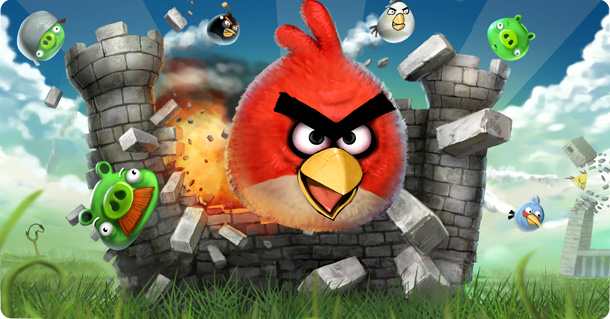
 Or more precisely, a focus on increasing intrinsic motivation for a task, rather than the task itself or the goal to be achieved.

In his book (and thinly veiled tract for self-determination theory)"Drive", Daniel Pink postulates that the keys to increasing motivation in self and employees is to set up environmental factors that encourage Autonomy, Mastery and Purpose, like some kind of triforce of business-self-help book formulae.


What intrigues me here is "Mastery".

How much money do people get paid for playing "Angry Birds"?  Does your iPhone just spit out redeemable prize tickets once the last big green piggiy is blown up? 
 One of life's lessons learned from "The Mighty Ducks", Is that peak performance comes from enjoying the game instead of  not pursuit of the prize, and some economic theories put forth a big paycheck or trophy doesn't vitiate subjects, and can in fact, discourage.

The raising level of difficulty is such an essential part of gamer culture, it's part of what defines the difference between a lowercase "game" like MS solitaire, and waiting in line for "blown weekend: the expansion pack".Games like these are a mess of increasing speeds, "leveling up", and  increasingly tough "Boss Battles". In short, Angry Birds, like many popular video games, get harder the longer you play it.

By comparison, what's the first level of your favorite video game like?
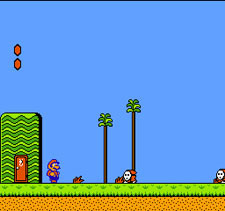

example only, Super Mario Bros 2 is NOBODY'S favorite video game

Damned Easy!

 As the maxim goes, "The Journey of 10,000 miles begins with the first step", so goes the crack dealer's corollary "The first one's free."


So here's the example. Let's say you're going to Quebec and  want to learn to speak French, but you don't like learning languages. You figure you could do it, if you had the Rocky Balboa-esque drive to get up at 5am, eat raw eggs and train hard at work memorizing grammar, syntax and vocabulary, but you just don't. Not to worry, the principles of Angry Birds can help you out!

1. Get rid of the prizes.

and ignore the external factors that might act as prizes. Remember, nobody gives you prizes for playing Angry birds. So fight the urge to give yourself congratulatory Oreos every half hour of study.

Besides, if you eat that many Oreos, you'll turn into Jabba the Hut and the Quebecois will just laugh at you.

2. Plot your plans on a curve. AND  Make the first one easy.

This is the source of positive addiction to  task mastery (and Angry Birds). For instance, in your quest to learn french, you might have a weekly quota of 42 vocabulary words per week to memorize. Which is six per day. Sure, that's not hard (or maybe it is to retain that information). But that will get boring.

 I know it sounds contrary to the ways of Hard Work, but why not just start with one vocabulary word on the first day, then two on the next, and so forth. There is an endorphin buzz that comes with meeting goals, and the more hits you have early will drive you for the bigger targets that you set for yourself later.

3. The little question.

"Did I do it better than yesterday? Did I do this better than last time? "

 Because, failures along the road are inevitable. It's possible that you might not master speaking French by the time you go to Canada. Sooner or later your own goals from tip #2 will escalate too high to meet when you're attempting to memorize 56 irregular verbs in one day.

So yeah, shit gets tough, and every so often you've gotta step back and remind yourself that the name of the game is to always be  improving at what you do, and to make that your target, is what it means to work hard.


27 December 2011

A visit from Gregory: An Education Experience.

"Christmas with Gregory" was intended to be conceived, and executed this past November, giving at least two weeks of December address-grabbing to make a decent mailing of the project. Certainly, the project was with the best of intents, with a use of landscape format, and the research and pre-production steps one needs to take with any comics project.


But, like many artists, I have a pesky dayjob that interferes with this proposition. Mainly a retail gig that lacks regular hours, where shifts are frequently switched, and you never know which mornings and evenings you are gonna work week to week. So deadlines on the self-set production schedule get pushed back... and pushed back... and pushed back even more.

So fast forward to December, the race is on to get his mini drawn, lettered, printed and SHIPPED before goddamned Christmas. And by December 19th, it's set. except...

The surface of a standard Office Photocopier is 17" wide while the full size of the original artwork (including that centerfold spread) is 18" wide. First Proofs are cropped artwork, no good, and no time to resize it since I'm at the zero hour AND have a holiday-season store shift starting in ten minutes.

CURSE YOU PHOTOCOPIERRRRRRR!

Game sum total: no printed mini comic this year.

Which brings about some lessons learned.

Lesson the First: Format is vital! ALWAYS know the final format of your project: aspect ratio, codec, ppi, frame rate, interlacing, color codes,paper sizes available, and of course, the size of your scanner bed before you even set pencil to paper to brainstorm!

If it's a painting to be framed, know what frame sizes are out there, first! Neglecting to even measure the scanning bed of the Xerox machine I was gonna use ahead of time shot me through the foot at the finish line.


Lesson the Second: If you aren't in an environment conductive to your goals: get out of there! A large part of what killed "Gregory" was the simple inability to predict what times would be available to work on it, due to working for an outfit with highly irregular hours.

It's not the store's fault for interferring with the schedule, it's mine for allowing it to.


Lesson the Third: Be a royal jerk about it!

We live in a culture that neither appreciates or understands the practical aspects of making art, regardless of discipline. Try out the following statements :
"I'm sorry, but I have church/a shift at McDonald's/ a picnic to go to" vs.
"I'm sorry, I have to draw"
Which of those two is somebody gonna debate?

Nobody else gets it. Not your semi-altzemic great aunt who thinks working a register at Michaels puts you "in the biz", not the government with it's comparative disregard for cultural enrichment and miniscule change jar excuse for a grants fund, and ESPECIALLY not any well meaning person or rationale that gently reminds you you "can always do that later."

Hell No.

In such an environment, to really stick to your guns and make it through requires significant force of personality: traits such as selfishness, rudeness, obsession, stubbornness, and even the occasional tantrum... at least where the work is concerned.

Cause otherwise, you're gonna cooperate yourself right the hell out of what's really important.

20 November 2011

The Films of Jonathan Lynn: The Fighting Temptations


2003
Released by Paramount Pictures
Screenplay by Elizabeth Hurter and
Saladin Peterson.

Darrin (Cuba Gooding Jr.) is a con man in need to escape some credit card debt who learns his Aunt Sally has just died, leaving him a large sum of money... on the condition that he lead a small time

Let's start with the good: "The Fighting Temptations" delivers solidly on the music, and amazingly (or maybe expectedly enough) the music numbers actually do their job.

In music theater, a songs is expected to further the plot, develop or reveal character, or heighten the mood. In modern film musicals, if a song doesn't further the plot, it's usually cut out. In short, if the story is going to have music, the music has to tell the story.

In her first big number Lilly sings "Fever" at a nightclub, while Darrin watches, this lets the audience know she can sing and is of value to Darrin's choir. The setting is much like the nightclubs where Darrin's mother sang, presumably an intended parallel by Elizabeth Hurter. Also, that "Fever" is a steamy ballad, also serves to set up Lilly as Darrin's love interest.

Later in the film, Darrin has rounded his choir out with prison convicts, who perform the inevitable rap number "Down to da River". In the story context, this impresses the Reverend (since they're rapping about Jesus, yo) and represents a positive swing for Darrin in his quest to build the choir. This action also infuriates Paulina, directly motivating her to make her next antagonistic move.

Even "Loves me Like a Rock", the song performed in honor of a child's haircut ( um... yeah) serves a story purpose in that it's both information for Darrin and exposition for the audience:Monte Carlo is filled with talented singers; they'd just rather work in Barber Shops than in the choir.

So really, as part of a film Genre, "The Fighting Temptations" is as every bit as valid as a musical as Cabaret, West Side Story or Tangled.


It's still a stupid movie though. (up comes unfair comparison).

The end of "Singing in the Rain" concerns talented-but-unknown Kathy Seldon is hidden behind a curtain, dubbing as the singing voice for famous-but-bitchy Lina Lamont at a live performance. Throughout the film, there's been a definite motif of "Somebodies" and "Nobodies", stars and commoners, like Don the movie star and Cosmo the Piano Player. This pattern is even reflected in the otherwise non-sequitor "Broadway Melody" sequence,. What this motif means is pretty much up to the individual critic/viewer, whether it's about class in society, the dynamics of public verses private lives or even just the value of being yourself. Anyway, the motif is consistent throughout the movie, and the whole thing culminates in that moment when the curtain goes up...


And the audience gets a charge of meaning, whether it's political , personal or elsewise. In fact, Singin in the Rain couldn't have ended any other way, and gained the same worldwide resonance it currently has.

The climax of "The Fighting Temptations" the vote to case Paulina out of the group, has no basis or setup in the story and consequently has no meaning whatsoever.
How else could this movie have ended? Darrin starts out the movie by lying a bunch, maybe the big significant climax could be he tells the truth when it really matters? Both Darrin and Paulina manipulate others for selfish reasons. Would an appropriate resolution have to do with selfishness verses altruism? Hell, there was a good three minute speech about booty earlier in the movie, if everybody won the Gospel competition by showing their asses, even that would make more sense.

Thing is "The Fighting Temptations" just doesn't have a point. No overriding theme, moral or observation to be expressed. Which makes the characters flat, without purpose and uninteresting, which in turn fails to engage the audience in any kind of emotional investment which in turn drains the scenarios of tension, peril, suspense or any reason to care. What's left is a plodding collection of sights and sounds that's either a dumb movie that keeps getting interrupted by music numbers, or a concert video with really inane skits between the songs.

Either way it's a waste of time.

13 November 2011

The Films of Jonathan Lynn: The Whole Nine Yards


The Whole Nine Yards
Released in 2000 by Warner Bros.
Written by Michael Kapner

A Dentist named Oz(Matthew Perry), gets a new neighbor who he instantly recognizes as “Jimmy the Tulip” (Bruce Willis) an infamous mob hitman. Oz gets caught up in a vendetta between Jimmy and his former boss, and a scenario where everybody wants to kill everybody else.

“Yards” is an off-target movie, it’s about Oz when it should be about Jimmy, who is an amazing character, seeded by some great cast design.

In “Story” Robert McKee argues that the dimensionality of a character is expressed in the surrounding cast. With Sophie, Jimmy is a cold killer, but with Jill, the hopeful hitperson in-training, he’s a supportive lover. When Jimmy is alone with Oz, he’s at ease, and a friendly guy. In the presence of fellow hitman Frankie, he’s always holding a weapon. Though a simple dichotomy of “hitman with a heart” may feel a little stale, it’s more compelling than “Dentist with no-particularly-contradictory-characteristics-at-all”.

I’m not so sure Jimmy isn’t the main character, as the climax of the film revolves around Jimmy’s decision: whether or not to kill Oz. (SPOLIER: he doesn’t). There’s no real tension. Who’d believe that Bruce Willis would whack Matthew Perry? If the audience is going buy the final dilemma, need to see the situation’s alternative beforehand. If we don’t see Jimmy kill a guy like Oz, we don’t know the consequences of his final decision. There’s a lot of exposition about Jimmy, but little action. Would the climax of “Star Wars” be so tense if we didn’t SEE what happened to planet Aldreaan first?

That said, Michael Kapner’s screenplay is a joy. Most comedy endings are predictable: the guy gets the girl, the innocent kids on death row are acquitted, the objective is obtained and they live happily ever after. But “Yards” employs a clever series of Hitchcockian plot twists and revelations, keeping the audience guessing at the final resolution, and interested in the story (even if the lead characters aren’t interesting) .

“The Whole Nine Yards” is about an everyman thrown in with some deeply weird people. And as such, a successful connection with the audience depends on how they relate to the everyman in question. With Oz, I just… don’t. Maybe it’s because the character is written with the same depth as the wacky hitmen he’s surrounded by , or maybe I just don’t find Matthew Perry all that appealing, lacking in that Cary Grant “It” factor. Perhaps if it was Jeff Daniels taking pratfalls and proving his virtue under fire, I’d have a different reaction. But I’m just not invested in Oz’s progress in all of this mess.

To date, “The Whole Nine Yards” is arguably Jonathan Lynn’s most successful directorial effort, with the highest opening weekend gross of any other of his films. (and this is the guy who still managed to get work after ‘Greedy’). And although I don’t particularly care for it, I certainly appreciate it more than “The Fighting Temptations”.

28 October 2011

Hip new subculture: Klaxophiles!

Observation: those who complain about the rudeness of others are, quite often, rude themselves.

So to avoid the barbed net of hypocrisy. I will address the following phenomenon...


...which I will term, "Klaxophilia", as a widespread lifestyle choice I've yet to understand. In fact, this post is addressed to Klaxophiles. So as a fellow driver, I have a few questions about your exciting subculture.


1. Are you genuinely more important than everybody else?

Before the industrial revolution, it was a fact of life that some people were just born better than others. Since it seems the primary purpose of a car horn is to put your interest above everybody else's, other drivers, pedestrians or people who happen live on a street, I guess it's because you're nobility.

Naturally, the gentry has places to go and the ugly unwashed peasantry known as everybody else are standing in the way of their betters!

But I'm still unclear as to the specifics, I mean, I have a car horn too. If I sound that, does that ennoble me, or is there a formal ceremony involving the giving of title first that I have to undergo? What the rate of conversion for nobility these days? If I scream in someone's face, does that at least make me a baron?


2. What is the secret horn-code?

There's all sorts of legitimate reasons to sound a horn, to alert other drivers they're driving poorly, chastise drivers for driving too slow, tell pedestrians they're walking too slow, to alert passengers to come out of the house, just to say hi, and on rare occasion, to prevent an auto accident.

I suffer from crippling car-racism. You see, all car horns sound alike to me, kinda like a loud pitch in F sharp . So , could one of you kindly Klaxophiles can direct me to a chart to distinguish between the F-sharp pitch that means " you probably should turn on your headlights" and the F-sharp pitch that means "I'm sorry to alert everybody in the vicinity, but this bicyclist is pedaling too slow"?

Actually, the one part of code I'm really interested in is the F-sharp pitches concerned with avoiding auto collisions, but there's just so many horn sounds nowadays, I hope you can understand how a poor unenlightened car-racist like my self can get confused.


3. Is high-volume communication really the wave of the future?

Yeah, I grew up in a backwards household. I really don't get texting, I'm still not on the bandwagon with skype or video conferencing , either, so it could be that loud noises are the next wave of communication.

Once again, I'm perplexed. Is it still okay to ring somebody's doorbell, or is it more modern to break into their home and pull the fire alarm? Is a handshake still in vouge as a way to greet somebody, or do I have to upgrade to an airhorn? If I get the latest airhorn for greetings, how do I know if it's compatible with the steam whistle I use to reserve tables at restaurants? Do the latest air raid sirens have an app for Angry birds? Cause, honestly, that'd be pretty cool.


Some who aren't familiar with my grave manner and reputation for sincerity might I'm being sarcastic. Which would bring me dangerously close to that hypocrisy net , implying that Klaxophiles aren't a post-modern royal subculture on the cutting edge of communications technology, but really a mob of inconsiderate jerks who put their petty impatiences above the concerns of everybody present. And maybe I'm doing the same thing here by saying "fuck you" to everybody who sounds a vehicle horn, but at least I'm not saying it at 109 decibels.


24 September 2011

The Films of Jonathan Lynn: Trial and Error


Released in 1997 by New Line Cinema, Screenplay by Sara and Gregory Bernstein, directed, of course, by Jonathan Lynn.

"Trial and Error" follows best friends Charles Tuttle (Jeff Daniels), a high-powered lawyer and Richard Reietti (Michael Richards), a struggling actor, and their high-jinks in a small town in Nevada . When Charles is too hung over from his bachelor party (thrown by Richard, of course) to appear in court for a routine continuation, Richard takes his place, but the matter goes to trial. While Richard has to defend a shameless defrauder (Rip Torn), Charles has to cope with his fall from grace, merely being ordinary.

Visually, the exteriors look great. In my post about "Wild Target", I've slammed Gabriel Beristain for setting up bland "sitcom style" look to these movies, but with the stunning snowcapped mountains in the background and exposures such that you can almost feel the desert heat, "Trial and Error" so far has set up the best cinematography in a Jonathan Lynn movie since Beristain's work on "My Cousin Vinny".


"Trial" is a well crafted movie with some very funny scenes , but compared with the other movies in Lynn's catalog, it doesn't really offer anything new. Every funny thing you could do with the legal system had already been done in "My Cousin Vinny". "Trial" is ostensibly about lies and deception (what with carrying on a charade during a trial about fraud), it seems like that ground has been covered, too.

All of Jonathan Lynn's films so far ar farce: the plot hinges on a secret being kept (like hiding the corpses in Clue') or a bald-faced lie being maintained (like how Vinny Gambini claims he's "Jerry Callow"). With little more to offer than some beautiful cinematography and Charlize Theron in a tight top, "Trial and Error" is little more than routine.

My focus with these reviews largely is story and screenwriting, and one thing "Trial and Error" illustrates very clearly is Character Arcs. Many screenwriters and critics believe this is the most important story element , from Michael Corolone's descent into corruption in the film version of "The Godfather", to Chihiro's growth from a whiny brat into a compassionate problem solver in "Spirited Away" .

Don't get them mixed up, now.

Usually, the character does something at the end of the movie that he would (or could) never do in a million years at the beginning.

In "Trial and Error" both Charlie and Richard go through their arcs. At the beginning of the film, Charlie is a lawyer for whom everything, even his pending marriage, is about his career. At the end of the movie, he walks away from the courtroom, dumps his fiancee and runs away with Charlize Theron. Richard starts the film as a goofball who'd rather show off than take responsibility for anything. At the end of the movie, he addresses the court honestly, admits his client is a scumbag and should be put away because it's the right thing to do.

Box Office Mojo says the film opened at #4 with a worldwide total gross around $14, million, considering New Line's modest release policy at the time (even "Austin Powers" didn't get a lot of launch promotion and publicity, that was saved for the sequel in '99 when the property was already classified as "pre-sold"). But that sounds like enough to keep a film directing career going, at least long enough to direct "The Whole Nine Yards".

10 September 2011

The Films of Jonathan Lynn: Sgt. Bilko


Released 1996 by Universal Pictures, written by Andy Breckman, based off of the Phil Silvers show, created by Nat Hiken.

Sergeant Ernest Bilko is a scheamer who repeatedly leaves his long-running fiance at the alter and runs illegal gambling operations behind his superiors' backs. When his old C.O., Major Thorn(Phil Hartman, perhaps the only good thing to come out of Greedy), arrives to audit progress on development of a "hover tank" (and settle a personal score with the Seargent), Bilko has to find a way to save his own skin and that of his base, Fort Baxter.

The Cast is fantastic! It's billed as a Steve Martin vehicle, but Bilko's really an ensemble piece. Glenne Headly, Daryl Mitchell and Dan freak'n Ackroyd round out the primary cast. Steve Martin's a wonderful physical comedian, but It seems the burden of whoever gets stuck on screen with him while he's doing schtick to bring in truthful reactions to the scene and make it believable! Which everyone (particularily Headly and Mitchell) do in spades.
Even the bit players are brilliant! Nearly everyone of the men in the motorpool get a scene-stealing moment, from Spc. Paparelli in drag (Max Casella) to Major Ebersole (Austin Pendelton...again) fantastically losing a game of poker the entire roster is amazing.

If you wanted to find a fault with the film, the characters are pretty thinly drawn. Bilko, and everybody else are basically Looney Tunes. Every character's pretty much a one-trait gag: the greedy one, the fat one, the mean one, the dumb one etc.
Major Thorn (the mean one) wants revenge on Bilko for sending him to Greenland. He breaks into Bilko's records and finds explicit evidence of every illegal gambling ring and dog race Bilko ever organized. That would be enough for a court martial, but Thorn takes it one step further and frames Ernie for diverting funds, claiming Fort Baxter's "Hover Tank" is a fraud. This claim gives Bilko the solution in the third act, when he and the motorpool successfully fly the tank and save the day.
A reasonable person in this situation would find the real evidence, turn it in, get Bilko booted away, simple. Only a complete caricature of obsession like Thorn would shoot himself in the foot like that, defying all common sense. I could whine about how this makes him a weaker antagonist by lowering his competence and threat level, but I won't.

Having excellent actors play a gang of incredibly broad characters serves a definite purpose: the story's over-the-top, but excellently constructed.

More specifically, it has a point. In "Story" Robert McKee makes mention of "the controlling statement", a brief dictum that sums up what happens and why. As he puts it

" The more beautifully you shape your work around one clear idea, the more meanings audiences will discover in your film as they take your idea and follow it's implications into every aspect of their lives".

Brian McDonald, author of "Invisible Ink", calls this the armature, like the wire skeleton of a clay sculpture, and also make mention, that in motion pictures, this moral (if you will) is often expressed offhand in a line of dialog.

In one of the very first scenes, Sgt. Barbella tells newcomer Laredo-I mean, Holbrook:
"That's the golden rule around here, you don't say nothing unless you're prepared to back it up."

Throughout the film, everything revolves around proving claims. Ernie Bilko tells Rita he loves her, but he has to prove it by being there for her, and (eventually) marrying her.
The biggest laughs come when character's have to justify their lies. Like why Bilko has a horse on a crane, and why Sgt. Henshaw (John Marshall Jones) has a closet full of dresses in a room he claimed was his (*gasp*SPOILER: it isn't).

In the finale, Bilko and his men "prove" the hover-tank works by faking the field demonstration. Thorn knows this is impossible since he personally sabotaged the tank's firing controls before, and accuses Bilko of trickeryh. When the visiting General asks him how he knows the tank can't work, Thorn (in True Daffy Duck fashion) indites himself out of frustration.

Bilko's a solid piece of work, thought out, well constructed, marvelously cast, and as always with Jonathan Lynn's movies, with Tony Lombardo's crisp editing keeping the pace brisk and enjoyable. Some places do drag, like the super-fake CGI on the Hover-Tank (hey, it was 1996!) but the film's got it where it counts.

In ticket sales, Bilko did twice the overall revenue of Greedy, and certainly has had a better track record critically, in television rotation and home video/media sales. A grand improvement, I'd say.

08 September 2011

The Films of Jonathan Lynn: Greedy

Released 1994 by Universal pictures, written by Lowell Ganz and Babaloo Mandel.

This movie blows. The script's poorly conceived, and impossible to execute well.


The scenario goes that, at the behest of his corrupt relatives, Danny (Michael J. Fox) has to stop his estranged Uncle Joe McTeague (Kirk Douglas) from willing his fortune to the attractive sexpot, Molly (Olivia d'Abo), who lives with him.
But the story lacks stakes.

Let's talk about Star Wars!

When Princess Leia was taken prisoner by Grand Moff Tarkin, she refused to give up the location for the rebel base? Why? Why didn't she just hand over the info, pay the fine in court and go home? Just as the audience is about to ask this, Tarkin orders his space station to blow up her home planet, Alderaan.

Now let's talk about When Harry Met Sally

Both Harry Burns and Sally Albright want to find a romance so true and long lasting they can give interviews in a tacky livingroom about it, but finding love it tough. Okay, but if it's so rough why doesn't Harry stop dating and start reading books from the beginning for a change? Why doesn't Sally just get a nice pith helmet with a fan on it? Before the audience even asks these questions, Harry tells Sally about "dying one of those New York deaths nobody hears about..."when they drive to the city at the start of the movie.

In his book "On Directing Film" David Mamet said the keys to drama lay in answering three questions : "What does the hero (or protagonist) want?" , "What's stopping him from getting it?" And "What happens if he doesn't get it?" .

If Luke Skywalker doesn't save the Princess, other planets will blow up, like Alderaan. If Harry and Sally don't find love, they will die alone, in worse states they are now. Even in the third act of "The Distinguished Gentleman"(which I slammed for sloppy writing) If Thomas doesn't indite Congressman Dick Dodge, thousands of photogenic little children will die of power-line cancer!

What happens if Danny doesn't get Uncle Joe's money? Nothing. Danny gets supported by his successful girlfriend rather than being able to open his own business, which... doesn't sound that bad. What happens if Uncle Joe just gives all his money to Molly? Nothing. In the very first scene, it's established all of the McTeagues are Upper-Middle Class. Without an inheritance, they all still have careers and equity There's no consequences. Like how poker's only fun with gains and losses riding on the outcome, dramatic narrative is only interesting if there's something at stake. It's basic fiction 101 and a writer-director with two major TV shows and four feature films under his belt should have known better.


I'll concede, though, the casting kicks ass. Austin Pendelton (the stuttering lawyer form "My Cousin Vinny") shows up again in a one-scene wonder. Coleen Camp (Yvette from "Clue") shows up as one of the cluster of relatives. Ed Begley Jr. sells a lot of otherwise lackluster scenes just through reactions (sincere, too, not a "take". One suspects the film should have been about him). And Phil Harris chews up every scene he's in, which is welcome in an otherwise very dull movie. Hell, Jonathan Lynn himself even plays the Butler, Douglas. But none of them have anything to work with.


This material just isn't funny. The setpieces are built from classic hack material and premises. Who likes celebrity impressions? At best a novelty. But the movie's big mid-point climax is Michael J. Fox doing an impersonation of Jimmy Durante, song and all. They had to put Jimmy Durante footage over the opening credits to explain who the guy was. This also kills any opportunity for an decent opening gag. The first thing on the screen is 40 year old re-run. The end routine is a fistfight between Danny and cousin Frank, not slapstick with odd props and silly noises, but... a real fistfight, where someone could break a jawbone. Jeez, man.

Personally, I find Greedy an increadible weak film, poorly structured with little in the way of defined characters. The script gives little in the way for anyone; costumer set designer, editor or the ensemble cast to work from. But, box office mojo says it opened at #2, which in absence of either a production cost or advertising budget implied the movie made money. Even the acknowledged great directors made an awful movie or two, and I'm glad that enough 1994 moviegoers didn't see things the way I do now, and that "Greedy" didn't turn out to be a career-killer for Jonathan Lynn as a director.


31 July 2011

The Films of Jonathan Lynn: The Distinguished Gentleman


So, a little later than I'd like, here's another review of the Films of Jonathan Lynn, The Distinguished Gentlemen, released in 1992 by Hollywood Pictures. Written by Marty Kaplan and Jonathan Reynolds.

The scenario follows con man Thomas Jefferson Johnson (Eddie Murphy), as he gets himself elected into congress to take advantage of lobbyist donations. He crosses paths with corrupt congressman Dick Dodge (Lane Smith) who displays the dark side of covering one's interests, and, at least as far as the VHS box promises, "hilarity ensues".

I can't admit to being an Eddie Murphy fan or expert, but "Distinguished Gentleman" does give Murphy a great to showcase his range of characters from the peak of his career. As Thomas Johnson the con man, Murphy poses as everything from cranky old Jews to a hyper-competent policeman to a pitch perfect "white announcer voice". Though many of these characters and types have been showcased in other movies (and most likely, the "cop" scene was written in to try to borrow some of Beverly Hills Cop's success), it's nice to see a professional doing what he does best.

I don't particularly like "Distinguished Gentleman" too much, mainly due to the script. After about an hour of watching Thomas romp through Congress, the littlest cancer patient wanders into his office, giving him noble motivation for defeating corrupt Congressman Dodge. What the hell? I know the movie was basically made by Disney, but even this stunt is stupid, saccarine and nonsensical. If Thomas is supposed to have a change of heart, shouldn't it be due to a character or element already well -established and organic to the scenario? Why does this darn bald kid and her magic cancer-causing lines come out of nowhere? It's shoddy writing pandering more to lifetime movie-of-the-week sensibilities than to principles of either drama or narrative logic.

My favorite thing about this movie is Lane Smith

Yeah, he looks older in this movie, but this is too creepy to pass up

He's just so damn intimidating. Unlike the well-meaning DA from "Vinny" Smith's character in "Gentlemen" is a mean-hearted Hollywood bad guy through and through. Though thinly drawn, Congressman Dodge is effective as he's written as basically being a better con man than Thomas (kind of like in Pirates of the Caribbean, Barbossa is a better at pirating ship than Captain Sparrow) .

All in all, I'd say this is one of Jonathan Lynn's weaker movies so far. For a guy who built his career on political satire, American Government seems like a logical subject matter. And like "Nuns on the Run" and "My Cousin Vinny" the film's not afraid to show it's research. But the thing's too damn sugary to really be an effective satire, and too damn thin on characterization to draw merit on other fronts. I might watch it again if I didn't have to pay money to do it.

04 July 2011

The Films of Jonathan Lynn: My Cousin Vinny


Compulsory Fan-art: Fred Gwynne as Judge Haller.

My Cousin Vinny – Released 1992 by Twentieth Century Fox Written by Dale Launer. Two touring New Yorkers are accused of murder while passing through Alabama. They’re only hope lies with Vinny Gambini, possibly the world’s worst lawyer.


Launer’s script starts out with a strong inciting incident: College kids Stan and Bill are arrested and booked for murder. The stakes start high and get higher. Every dramatic device is clear and strongly stated: Vinny’s dramatic need, the obstacles to that end , rising stakes and an ending climax that reincorporates both plot and character. My Cousin Vinny could very well be re-titled “Hollywood Screenwriting 101”. Whether that's a jibe or compliment (hint: it's a compliment) depends on one's tastes as a moviegoer, I suppose.

However, the subplot where Vinny’s harassed by a local itching to start a fight slows things down. In the movie, Vinny’s finance’, Lisa (Marisa Tomei) takes Vinny to a bar to settle a pool debt. A local good ‘ol boy refuses to pay up, and Vinny negotiates the terms of ass-kicking and payment. The scene shows Vinny being competent, so as not to lose all credibility with the audience. And it would be great if the scene ended there. But the pool shark is made into a running gag and periodically pops up to annoy Vinny (and the audience). The movie has pretty deliberate pacing as is, with repetitive legal proceedings determining the structure, and the pool shark sub plot distracts and just slows things down even more.

Overall, “My Cousin Vinny” is an excellent film due to its fantastic casting! Everybody from Joe Pesci as Vinny to Austin Pendleton as the one-scene-wonder Public Defender deliver top-notch performances, but I really have to stop and just spew some admiration for Fred Gwynne as Judge Haller. Gwynne’s damn intimidating, which is a little weird coming from a guy best known as Herman Munster. Gwynne’s choices, from his deliberate, high-status movement to the way he rests his head on his hand, make him seem every inch the terrifying first grade school teacher, if that school teacher had the power to throw you in jail and sentence you to death.

“My Cousin Vinny” is probably Jonathan Lynn’s first qualified US success. Produced in the US (As opposed to "Nuns" produced in Great Britian by none other than George Harrison), "Vinny" made back it’s budget in the first theatrical run (Approximately $53,000,000 gross over a $11,000,000 budget), and nabbing a supporting Actress Award for Marisa Tomei.

By the way, did you notice that this is, like, the third light comedy this guy's made that opens with a violent death? What's with that?

30 June 2011

The Films of Jonathan Lynn: Nuns on the Run


Since the internet can't produce any SFW pictures of
"young Camille Corduri" here is some compulsory fan art
.

Nuns on the Run, released 1990 by 20th Century Fox, produced by Handmade Films, Written by Jonathan Lynn.

Eric Idle and Robbie Coltrane dress as brides of Christ in a scenario largely reminiscent of “Some Like It Hot” in a movie released a full two years before “Sister Act” with a small amount of “Blues Brothers” thrown in with at least one direct shout out to “Charlie’s Aunt”.

Most guys will recognize that dude from Monty Python and Hagrid straight off the bat, but the third lead is none other than Jackie Tyler herself, Camille Coduri. I’d surmise that it’s very hard to combine sexy and comical, so that a comedienne you can spank to is a valuable and rare find, but It’s probably because I’m really into hot chicks who tell jokes. Either way, Corduri really is this movie’s hidden treasure. Her character, Faith, plays very much like Marilyn Monroe in Some Like it Hot: the bombshell love interest. But unlike Monroe’s “Sugar Kane”, Faith is comically near sighted (making her “blind faith”, a visual punning gag used nine years before Shannon Elizabeth’s character Justice in “Jay and Silent Bob Strike Back”). When she isn’t naively and appealingly falling in love with a guy twice her age, she’s taking pratfalls and gunshot wounds, making her a true participant in the farce, rather than a detached outside observer.


On the whole, ‘Nuns on the Run’ is a better film than Clue in many ways: better ADR and continuity for instance, but it’s got crap villains. Brian Hope (Idle) and Charlie Mc Manus(Coltrane) dress in drag to hide from the mob. But the gangsters just aren’t that threatening. The main antagonist, Casey the gangleader (played by ), always accompanied by an “evil” guitar riff, fails to intimidate or believably come across as a guy who could head up a London gang. The rival gang, the Triads, come a across as little more than “evil asian” stereotypes. I wouldn’t call the stereotypes hateful, or intentionally offensive, but there’s no believability in the possibility these thinly drawn bad guys might win, killing a great deal of the tension in the film.

Oh yeah, and God’s pretty much an active character. Like in John Landis’s “The Blues Brothers”, the characters make mention and even supposition of divine intervention. But while Jake and Ellwood Blues were protected by a diety who would send literal illumination from above. God works differently with Brian and Charlie. Pretty much every coincidence in the movie can be interpreted as an act of God, from Brian and Charlie’s getaway car randomly running out of fuel to (SPOILER), the nuns of the Training school getting a suitcase full of much needed money for their drug rehabilitation clinic, Jonathan Lynn’s version of God works in strange ways. My favorite gag in the movie is when Casey has the heroes dead-to-rights at gunpoint in a hospital. When he’s about to pull the trigger, he’s smacked into by a crash-cart team. Deus Ex Machina, with a real machine no less!

Sure, 'Nuns' may not have the best jokes or comedic setpieces that hit the highs I mentioned in 'Clue', but it's got a solid plot construction, charming and likeable actors (important for light comedy), and served as enough of a commercial and artistic success to get Jonathan Lynn his next directing project with Fox, "My Cousin Vinny".

19 June 2011

The Films of Jonathan Lynn: Clue

So here's the first in my own little mini series, a profile and reviews of the films of Jonathan Lynn, known in the UK for the series "Yes Minister", sadly unappreciated in the United States despite his two decades of film directing, hopefully, this will make more sense as I go along. First up, is Clue.

Here's some obligatory fan art of Lesley Ann Warren.

Released 1985 by Paramount pictures, Screenplay by Jonathan Lynn and John Landis, based on the board game.

Six blackmail victims are given color-coded pseudonyms and collected at a New England mansion for an intervention by Wadsworth , a Butler, then people die. The movie was released with multiple endings so that, like the board game, the culprits are interchangeable, also notable is the all-star cast which includes Madeline Kahn, Christopher Lloyd and freaking Tim Curry at what may be the height of their comedic prowess.

Clue has great rising action. The first fifteen minutes are deliberate, complete with awkward- pause gags. By the end of the film, the pacing is frenetic with everyone running at full speed around the mansion as Wadsworth explains the whole damn movie at fever pitch.

However, the different endings screw everything up. Only the third ending is satisfactory and logical: every murder is committed by a different guest, Wadsworth is really Mr. Boddy, and Mr. Green is a government agent. In the other versions, the rest of the cast goes sadly unused as the plot hones in on a single murderer. The VHS release and TV cut of the film play all three endings in succession, extending the finale longer than it should (and screwing up the pacing). Though the film seems to make some solid observations about the nature of reconciling a private and political life, the whole point of the film gets lost in the conflicting resolutions.

.

By the way, Michael Kaplan’s costumes kick ass! Everybody’s wardrobe reveals information about their character, from the obvious (Mrs. White is in mourning) to the subtle (Col. Mustard wears a tailored suit, indicating undeclared income). Kaplan works the character’s namesakes into their appearance without being over-the-top; Professor Plum’s vest, for instance. The only character unlike his game piece is Mr. Green, who dresses in navy blue. Going by the third ending, this is positively brilliant: he’s not really Mr. Green.

Though Clue didn’t make a domestic profit in it’s initial release, the movie has since developed a fan following, and remains popular enough to warrant never-ceasing rumors of a remake. Clue is smart and hilarious, but will never be remembered as a “classic” since the multi-endings confuse the hell out of everybody.

But this movie rocks, anyway.

09 June 2011

Look who's (not) talking.

Here's a trick. Watch a movie or TV show or whatever. Look for a two-shot or group shot.
Somebody will usually be talking. The fun part is... look at who isn't talking. (mind blowing, isn't it?).


In this scene from Back to the Future, it's Doc Brown's line. But Michael J. Fox doesn't stop acting because he's not speaking, he's still present in the scene: reacting to what the other players say and to what's going on.

I find this a pretty good litmus test for character animation.


Can you still see what's going on in the character's head when another player is speaking? What would you think is Santa Claus's inner monologue right here?


How About Daffy, or Elmer Fudd?

I find looking at the nonspeaking characters, and gauging their reactions and acting in those moments, in a two-shot or group shot is a good way to determine between what's good animation...


...and what I would consider otherwise.

15 March 2011

Blah Blah Blah Mars and Moms

Apparantley the "buzz" which hip persons love to follow and respond to is that Disney's mo-cap picture "Mars Needs Moms" is something of a flop.


Big whoop! Return to Oz is one of my favorite films, and that pretty much bled money at the Box Office, too.

To be fair, I haven't seen "Mars Needs Moms". But some people really seem to love to hate it.

like Brandon Gray
"Mars was severely limited by its premise, which was better suited to a television cartoon, and its execution looked awkward, incoherent and creepy in the marketing."

Dave White

Though not directed by Robert Zemeckis (the evil performance-capture devotee who inflicted The Polar Express and the Jim Carrey version of A Christmas Carol on the world) he did produce it, and on top of its main crime of being unimaginative and cobbled together from chunks of other movies, it ices its fallen failure cake with that same creeped-out, dead-soul facsimile human being quality of those earlier endeavors.

And Select posters at Cartoon Brew

...didnt like it at all. the designs are ugly and unappealing, the story is cliched , the ‘animation’ soulless...

...It is the single closest thing to the literal equivalent of pure bile that a movie could aspire to be. Sour, burning, painful, and acidic in the way that it thrives on disintegrating the very notion of integrity into absolute nothingness...

Okay, so here's my question: What's the big deal?
So you have a movie that's in the red at the Box Office, and expensive to boot.


And it's stars are creepy puppet people.


Or maybe critics dislike it since the emphasis is more on spectacle than story.


Or maybe it is just a generally horrible, inept movie.


Seems to me, "Mars Needs Moms" has been outdone in all those respects. Also, Box Office Returns are no indication of quality, since beloved movies from "The Rocky Horror Picture Show" to Disney's "Pinocchio" lost money in their initial theatrical runs.

I dunno. Maybe all this critical/internet backlash for "Moms" stems from a resentment toward Motion Capture features in the first place. But my question is, if "Mars Needs Moms" is really such a thoroughly awful whatever, why is it such a point of fascination? Cuz nowadays, who gives a damn about Howard the Duck, either way?


29 January 2011

Realism vs. Beliveability

Nowadays, the trend in movie publicity seems to be to talk of "realism" in motion pictures, particularily in the latest screen versions of James Bond, Robin Hood and Batman.

Where, before, such movies were considered hammy, over the top and rediculous, the "gritty reboots" of such franchises (or public domain characters) are supposedly more down to earth.


Messers Wayne, Bond and Hood have never been realistic from day one. Even in the "gritty reboots" Robin Hood fights impossibly epic battles and posseses superhuman aim. Batman drives a car which jumps on top of buildings, and turns into a motorcycle . If James Bond were an actual spy, he'd probably spend the whole movie inside an office instead of killing people for two hours and playing Texas Draw with the world's most dangerous terrorists.

Conceits like those aren't really a far cry from wise moorish warriors, magic brainwave machines and crotch-searing lasers from these movies' "less realistic" predecessors.

To help throw this into perspective, consider films with genuinely plausible scenarios.
A Saturday in detention is a far cry from Russel Crowe beating back a French invasion. A kid getting thrown in juvenile hall is miles away from spies footracing through a construction site.

Which brings me to believability. Rotten tomatoes' "top 100" list is peppered with titles from Toy Story 2 (as of this writing, currently at the top of the list) , Hard Day's Night, King Kong, Dr. Strangelove, Aliens, North by Northwest, Mary Poppins and the Invisible Man. If there were truly to be a bias towards the realistic in movies, these films would not be on that list.


I find the laws of drama compel audiences more than the laws of physical plausibility or spectacle. Just as it's more important to find out what happens to Kong rather than wonder how a 50 foot gorilla could ever exist, the High School problems of Bender, Claire and Brian preoccupy the viewer from complaining that there aren't any 50 foot gorillas present to make things more exciting.

So, to hell with "realism"; it's beside the point.

http://www.rottentomatoes.com/top/bestofrt_year.php